Le master Conversion des Energies est adossé à l’unité de recherche ENERGY-Lab de l’université de La Réunion.
La formation est adossée à une unité de recherche dynamique. Sept plateformes technologiques, dont une plateforme BSRN (*), résultat de projets de recherche et développement soutenus par des financements européens (FEDER, H2020), constituent un environnement de recherche interdisciplinaire unique dans la zone océan indien et permettent :
- d’étudier l’impact des changements globaux sur les ressources d’ENRV,
- de tester en temps réel des stratégies de gestion de l’énergie, pouvant tenir compte de la prévision des ressources,
- de concevoir des cellules de piles à combustibles et d’électrolyseurs,
- d’optimiser les performances et le vieillissement de systèmes piles à combustibles et électrolyseurs.
(*) Le réseau BSRN (Baseline Surface Radiation Network) est un projet du Groupe des données et des évaluations de l’Expérience mondiale sur les cycles de l’énergie et de l’eau (GEWEX) sous l’égide du Programme mondial de recherche sur le climat (PMRC) et, en tant que tel, il vise à détecter les changements importants du champ de rayonnement terrestre à la surface de la Terre qui peuvent être liés aux changements climatiques (https://bsrn.awi.de).
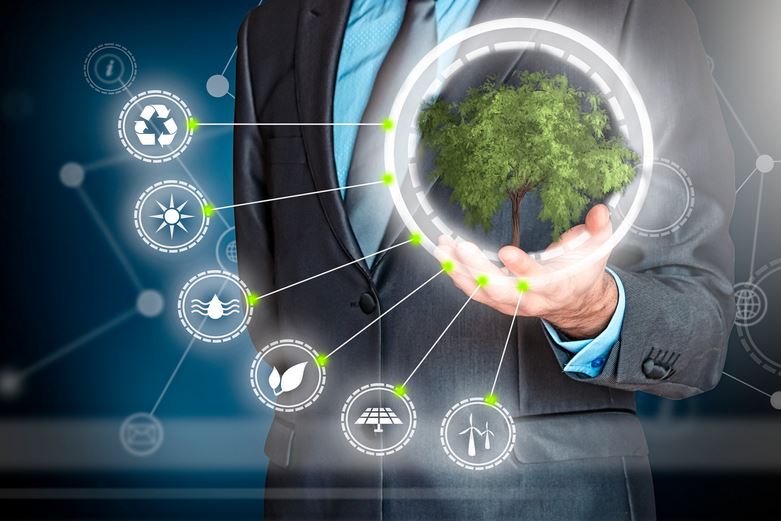 |
Obtenez les compétences essentielles pour :
des systèmes énergétiques renouvelables intelligents dans un environnement fort en employabilité. |
Ce Master s’appuie sur les activités de l’unité de recherche et aborde les problématiques des 3 Opérations Scientifiques (OS) :
- OS1 : Gestion de l’énergie : variabilité à La Réunion et en zone tropicale, métrologie et modélisation
- OS 2 : Hydrogène énergie : conception, diagnostic, contrôle
- OS 3 : Systèmes électroniques et l’instrumentation déployés.
 |
Les objectifs professionnels sont de former des chercheurs et des cadres (ingénieur, expert, conseiller, …) de haut niveau.
Dans cet objectif, la formation permettra aux diplômés d’accéder rapidement à des fonctions de responsabilité en développant au cours de leur cursus, des compétences scientifiques et techniques, ainsi que différentes compétences transversales. |
La formation comporte une année de M1 (60 ECTS) et une année de M2 (60 ECTS). Les deux années sont dispensées entièrement en français.
M1 Semestre 1 :
| UE | Intitulé | CM | TD | TP | ECTS |
| UE 1 | Les acteurs de l’énergie (cadre réglementaire et législatif) | 30 | – | – | 5 |
| UE 2 | Energies PV et éolienne | 6 | 10 | 14 | 4 |
| UE 3 | Contrôle des systèmes dans l’espace d’état | 6 | 10 | 14 | 4 |
| UE 4 | Energie appliquée | – | 26 | 20 | 4 |
| UE 5 | Chaîne de mesure | 6 | 10 | 14 | 4 |
| UE 6 | Récupération d’énergie RF (ondes guidées) | 4 | 6 | 10 | 3 |
| UE 7 | Simulation numérique multiphysique | 6 | 10 | 14 | 4 |
| UE 8 | Anglais universitaire et préprofessionnel | – | 30 | – | 2 |
M1 Semestre 2 :
| UE | Intitulé | CM | TD | TP | ECTS |
| UE 1 | Rayonnement solaire et transfert radiatif | 6 | 10 | 14 | 4 |
| UE 2 | Dynamique des fluides | 6 | 10 | 14 | 4 |
| UE 3 | Optimisation de systèmes énergétiques | 12 | 8 | 0 | 3 |
| UE 4 | Vecteur H2 et systèmes de stockage | 6 | 10 | 14 | 4 |
| UE 5 | Architecture des réseaux bas débit, basse consommation | 4 | 6 | 10 | 3 |
| UE 6 | Réseau intelligent : transmissions et protocoles pour la basse consommation | 4 | 6 | 10 | 3 |
| UE 7 | Simulation numérique – électronique, TESF | 6 | 10 | 14 | 4 |
| UE 8 | Projet (expérience en milieu professionnel) | 20 | – | – | 5 |
M2 Semestre 3 :
| UE | Intitulé | CM | TD | TP | ECTS |
| UE 1 | Changements climatiques et impacts | 6 | 10 | 14 | 4 |
| UE 2 | Enjeux du changement climatique et développement durable | 6 | 10 | 14 | 4 |
| UE 3 | Diagnostic des systèmes | 12 | 8 | 0 | 3 |
| UE 4 | Gestion d’énergie dans les réseaux électriques (Smartgrid) | 6 | 10 | 14 | 4 |
| UE 5 | Services réseaux pour périphériques contraints | 4 | 6 | 10 | 3 |
| UE 6 | Réseau et sécurité | 4 | 6 | 10 | 3 |
| UE 7 | Droit de l’énergie et géopolitique de l’environnement | 6 | 10 | 14 | 4 |
| UE 8 | Anglais | 20 | – | – | 5 |
M2 Semestre 4 :
| UE | Intitulé | CM | TD | TP | ECTS |
| UE | Expérience en milieu professionnel | 20 | – | – | 5 |
 |
Toute demande d’admission en Master 1 et 2 sélectifs devra passer par la plateforme ecandidat (candidature.univ-reunion.fr) du 1er avril au 3 mai 2022. |
Le Master Energie s’adresse aux étudiants titulaires d’une licence scientifique.
Pour toutes inscriptions en M1 & M2, un dossier doit être complété.
Pour les étudiants titulaires ou inscrits en L3, il s’agit d’un dossier d’admission. Pour les autres candidats, un dossier de validation des études ou des acquis.
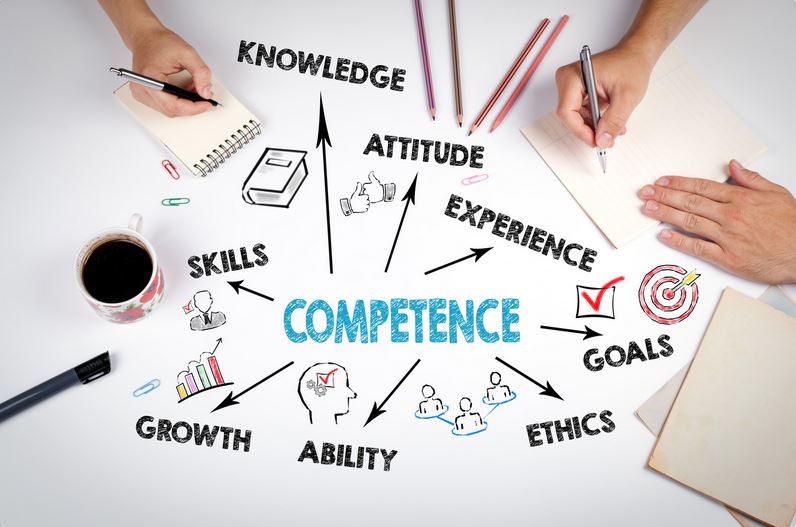 |
Les compétences attendues à l’issue du Master : |
Compétences scientifiques :
- Attitude de rigueur et logique scientifique
- Aptitude à constituer des dossiers scientifiques et techniques
- Capacité à appréhender de nouvelles connaissances, techniques – réactivité
- Esprit d’analyse de situations complexes – approche interdisciplinaire
- Capacité liée à l’innovation et la veille technologique
Compétences techniques :
- Evaluer les potentialités des technologies pour de nouvelles applications
- Concevoir et optimiser des systèmes énergétiques renouvelables performants et sûrs
- Utiliser, maîtriser les nouvelles technologies disponibles dans les milieux économiques et/ou industriels
Compétences organisationnelles :
- Capacité à travailler en autonomie, en responsabilité
- Capacité à travailler en temps limité
- Méthodologie de recherche et traitement de documents et de données
- Gestion et conduite de projet
Compétences relationnelles :
- Capacité à communiquer avec clarté et précision dans un langage adapté
- Maîtrise de l’anglais technique et scientifique
- Aptitude à travailler en équipe autour d’un projet
- Capacité à nouer des relations professionnelles avec des partenaires
Consultez le Répertoire National des Certifications Professionnelles (RNCP) qui précise les compétences validées par le Master Énergie.
Poursuite d’études :
Doctorat
Débouchés :
- Recherche et développement – innovation
- Ingénieur de production dans les secteurs de l’énergie
- Ingénieur d’étude ou Assistant Chef de Projet Expert auprès des collectivités et administrations locales et territoriales dans tous les secteurs se rapportant à l’énergie et la maîtrise de l’énergie
 |
Les futurs étudiants de Master de l’Unité de Recherche ENERGY-Lab auront la possibilité d’être en lien avec les acteurs d’énergie en ZNI, dans un environnement international. |
Vous pourrez bénéficier de l’expertise des enseignants-chercheurs des laboratoires :
- LEPMI (Université de Grenoble),
- FEMTO-ST, CRC et la fédération FC-Lab (CNRS & Université de Bourgogne-Franche Comté),
des universités :
- des Mascareignes de Maurice
- Institut Technologique du Cambodge
Ainsi que celle des intervenants de la société civile, notamment de membres du cluster TEMERGIE.
 |
|
Energie Intelligente
Climat
SmartGrid
Energies Renouvelables
Hydrogène
Photovoltaïque
Eolien
ZNI, Zone Non Interconnectée
Développement Durable